springboot bean启动流程bean加载源码级分析
之前面试被问了三级缓存,非常经典的问题,我回答了解决循环依赖,动态代理的问题,但是被深入问道如何解决的,并没有回答的很好。由此发现自己对于spring的源码研究还是不够透彻(之前研究过,现在忘了很多),所以我今天来从源码角度来分析以及整理一下spring bean加载的整个流程。
本次分析基于 springboot 3.5.3版本
之前面试被问了三级缓存,非常经典的问题,我回答了解决循环依赖,动态代理的问题,但是被深入问道如何解决的,并没有回答的很好。由此发现自己对于spring的源码研究还是不够透彻(之前研究过,现在忘了很多),所以我今天来从源码角度来分析以及整理一下spring bean加载的整个流程。
本次分析基于 springboot 3.5.3版本
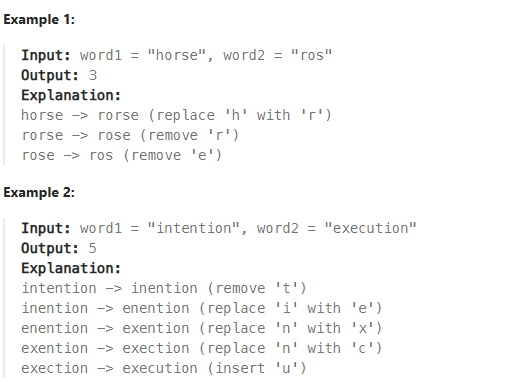
Given two strings word1 and word2, return the minimum number of operations required to convert word1 to word2.
You have the following three operations permitted on a word:
Insert a character
Delete a character
Replace a character
c++ 中的模板,就是类似于java中的泛型,但是与java泛型又不太一样。作为强类型语言,Java中的泛型由于无法确定具体class,并且由于泛型擦除的存在,使得每个泛型在jvm中其实都是以Object的形式存储的。但是c++的模板确是在编译器确定类型,由此我们就可以在代码中对泛型进行预期之内的操作.
there are two main replacement policies used in redis, LRU(https://en.wikipedia.org/wiki/Cache_replacement_policies#LRU) and LFU
the LRU we can solve by use a simple LinkList code, but the LFU is a bit of difficult. It’s necessary for me to write a note to record the way of thinking I have about it.
Design a data structure that follows the constraints of a Least Recently Used (LRU) cache.
Implement the LRUCache class:
LRUCache(int capacity) Initialize the LRU cache with positive size capacity.
int get(int key) Return the value of the key if the key exists, otherwise return -1.
void put(int key, int value) Update the value of the key if the key exists. Otherwise, add the key-value pair to the cache. If the number of keys exceeds the capacity from this operation, evict the least recently used key.
The functions get and put must each run in O(1) average time complexity.
Invalid value type for attribute ‘factoryBeanObjectType’: java.lang.String
项目地址
There are n children standing in a line. Each child is assigned a rating value given in the integer array ratings.
You are giving candies to these children subjected to the following requirements:
Each child must have at least one candy.
Children with a higher rating get more candies than their neighbors.
Return the minimum number of candies you need to have to distribute the candies to the children.
You are given an n x n integer matrix board where the cells are labeled from 1 to n2 in a Boustrophedon style starting from the bottom left of the board (i.e. board[n - 1][0]) and alternating direction each row.
You start on square 1 of the board. In each move, starting from square curr, do the following:
Choose a destination square next with a label in the range [curr + 1, min(curr + 6, n2)].
This choice simulates the result of a standard 6-sided die roll: i.e., there are always at most 6 destinations, regardless of the size of the board.
If next has a snake or ladder, you must move to the destination of that snake or ladder. Otherwise, you move to next.
The game ends when you reach the square n2.
A board square on row r and column c has a snake or ladder if board[r][c] != -1. The destination of that snake or ladder is board[r][c]. Squares 1 and n2 are not the starting points of any snake or ladder.
Note that you only take a snake or ladder at most once per dice roll. If the destination to a snake or ladder is the start of another snake or ladder, you do not follow the subsequent snake or ladder.
For example, suppose the board is [[-1,4],[-1,3]], and on the first move, your destination square is 2. You follow the ladder to square 3, but do not follow the subsequent ladder to 4.
Return the least number of dice rolls required to reach the square n2. If it is not possible to reach the square, return -1.
You are given a directed graph of n nodes numbered from 0 to n - 1, where each node has at most one outgoing edge.
The graph is represented with a given 0-indexed array edges of size n, indicating that there is a directed edge from node i to node edges[i]. If there is no outgoing edge from i, then edges[i] == -1.
You are also given two integers node1 and node2.
Return the index of the node that can be reached from both node1 and node2, such that the maximum between the distance from node1 to that node, and from node2 to that node is minimized. If there are multiple answers, return the node with the smallest index, and if no possible answer exists, return -1.
Note that edges may contain cycles.